846 critics, programmers, academics and distributors have
voted – and the 50-year reign of Kane is over. Our critics’ poll has a
new number one.
Introduction
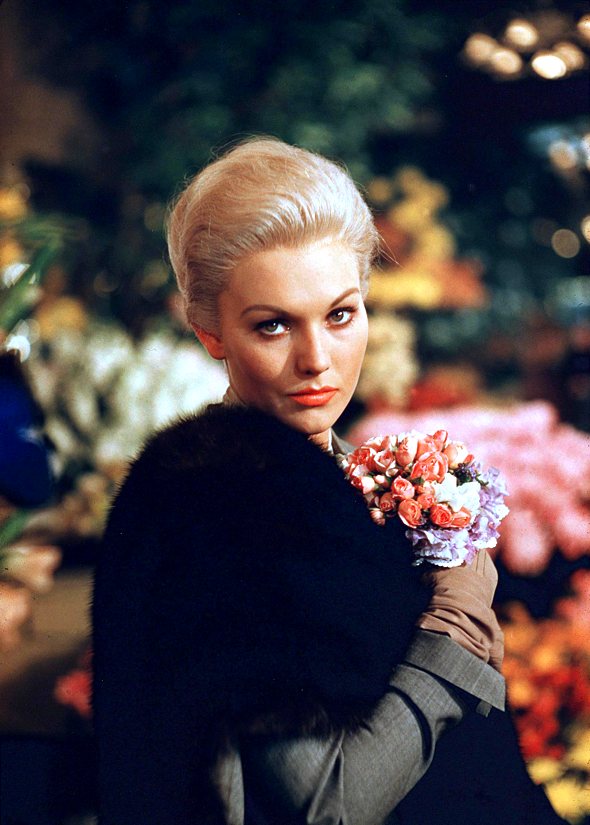 Ian Christie rings in the changes in our biggest-ever poll.
And the loser is – Citizen Kane. After 50 years at the top of the Sight &
Sound poll, Orson Welles’s debut film has been convincingly ousted by
Alfred Hitchcock’s 45th feature Vertigo – and by a whopping 34 votes,
compared with the mere five that separated them a decade ago. So what
does it mean? Given that Kane actually clocked over three times as many
votes this year as it did last time, it hasn’t exactly been snubbed by
the vastly larger number of voters taking part in this new poll, which
has spread its net far wider than any of its six predecessors.
But it does mean that Hitchcock, who only entered the top ten in
1982 (two years after his death), has risen steadily in esteem over the
course of 30 years, with Vertigo climbing from seventh place, to fourth
in 1992, second in 2002 and now first, to make him the Old
Master. Welles, uniquely, had two films (The Magnificent Ambersons as
well as Kane) in the list in 1972 and 1982, but now Ambersons has
slipped to 81st place in the top 100.
So does 2012 – the first poll to be conducted since the internet
became almost certainly the main channel of communication about films –
mark a revolution in taste, such as happened in 1962? Back then a
brand-new film, Antonioni’s L’avventura, vaulted into second place. If
there was going to be an equivalent today, it might have been Malick’s
The Tree of Life, which only polled one vote less than the last title in
the top 100. In fact the highest film from the new century is Wong
Kar-Wai’s In the Mood for Love, just 12 years old, now sharing joint
24th slot with Dreyer’s venerable Ordet…
Ian Christie’s full essay on changing fashions on our new poll is published in the September 2012 issue of Sight & Sound, available from 3 August on UK newsstands and as a digital edition from 7 August. See Nick James’s poll coverage introduction
for details of our methodology. Texts below are quotations from our
poll entries and magazine coverage of the top ten. Links are to the BFI’s Explore Film section. The
full, interactive poll of 846 critics’ top-ten lists will be available
online from 15 August, and the Directors’ poll (of 358 entries) a
week later.
THE TOP 10
1. Vertigo
Alfred Hitchcock, 1958 (191 votes)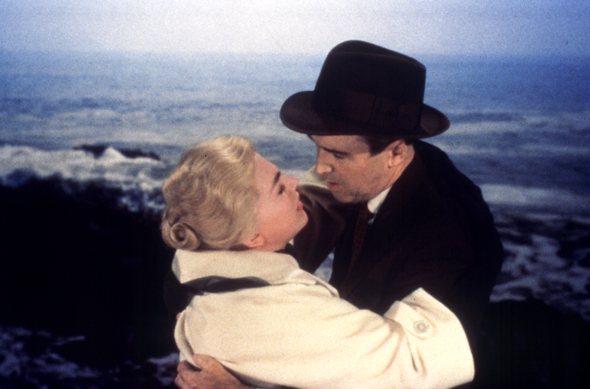 Hitchcock’s supreme and most mysterious piece (as cinema and as an
emblem of the art). Paranoia and obsession have never looked better—Marco Müller
Hitchcock’s supreme and most mysterious piece (as cinema and as an
emblem of the art). Paranoia and obsession have never looked better—Marco Müller
After half a century of monopolising the top spot, Citizen Kane was
beginning to look smugly inviolable. Call it Schadenfreude, but let’s
rejoice that this now conventional and ritualised symbol of ‘the
greatest’ has finally been taken down a peg. The accession of Vertigo is
hardly in the nature of a coup d’état. Tying for 11th place in 1972,
Hitchcock’s masterpiece steadily inched up the poll over the next three
decades, and by 2002 was clearly the heir apparent. Still, even ardent
Wellesians should feel gratified at the modest revolution – if only for
the proof that film canons (and the versions of history they legitimate)
are not completely fossilised.
There may be no larger significance in the bare fact that a couple
of films made in California 17 years apart have traded numerical
rankings on a whimsically impressionistic list. Yet the human urge to
interpret chance phenomena will not be denied, and Vertigo is a crafty,
duplicitous machine for spinning meaning…—Peter Matthews’ opening to his new essay on Vertigo in our September issue
 2. Citizen Kane
Orson Welles, 1941 (157 votes)
Kane and Vertigo don’t top the chart by divine right. But those two
films are just still the best at doing what great cinema ought to do:
extending the everyday into the visionary—Nigel Andrews
In the last decade I’ve watched this first feature many times, and
each time, it reveals new treasures. Clearly, no single film is the
greatest ever made. But if there were one, for me Kane would now be the
strongest contender, bar none—Geoff AndrewAll celluloid life is present in Citizen Kane; seeing it for the first or umpteenth time remains a revelation—Trevor Johnston
 3. Tokyo Story
Ozu Yasujiro, 1953 (107 votes)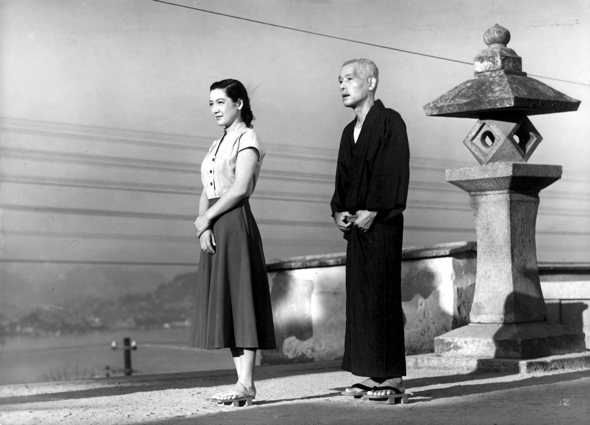
Ozu used to liken himself to a “tofu-maker”, in reference to the
way his films – at least the post-war ones – were all variations on a
small number of themes. So why is it Tokyo Story that is acclaimed by
most as his masterpiece? DVD releases have made available such prewar
films as I Was Born, But…, and yet the Ozu vote has not been split, and
Tokyo Story has actually climbed two places since 2002. It may simply be
that in Tokyo Story this most Japanese tofu-maker refined his art to
the point of perfection, and crafted a truly universal film about
family, time and loss—James Bell
4. La Règle du jeu
Jean Renoir, 1939 (100 votes) Only Renoir has managed to express on film the most elevated notion
of naturalism, examining this world from a perspective that is dark,
cruel but objective, before going on to achieve the serenity of the work
of his old age. With him, one has no qualms about using superlatives:
La Règle du jeu is quite simply the greatest French film by the greatest
of French directors—Olivier Père
Only Renoir has managed to express on film the most elevated notion
of naturalism, examining this world from a perspective that is dark,
cruel but objective, before going on to achieve the serenity of the work
of his old age. With him, one has no qualms about using superlatives:
La Règle du jeu is quite simply the greatest French film by the greatest
of French directors—Olivier Père
 5. Sunrise: A Song of Two Humans
FW Murnau, 1927 (93 votes)
When F.W. Murnau left Germany for America in 1926, did cinema
foresee what was coming? Did it sense that change was around the corner –
that now was the time to fill up on fantasy, delirium and spectacle
before talking actors wrenched the artform closer to reality? Many
things make this film more than just a morality tale about temptation
and lust, a fable about a young husband so crazy with desire for a city
girl that he contemplates drowning his wife, an elemental but sweet
story of a husband and wife rediscovering their love for each other.
Sunrise was an example – perhaps never again repeated on the same scale –
of unfettered imagination and the clout of the studio system working
together rather than at cross purposes—Isabel Stevens
 6. 2001: A Space Odyssey
Stanley Kubrick, 1968 (90 votes)
2001: A Space Odyssey is a stand-along monument, a great visionary
leap, unsurpassed in its vision of man and the universe. It was a
statement that came at a time which now looks something like the peak of
humanity’s technological optimism—Roger Ebert
7. The Searchers
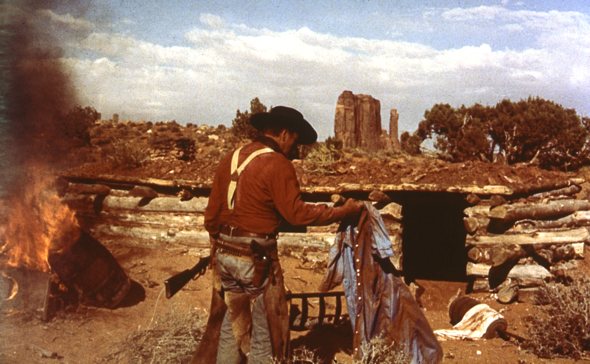 John Ford, 1956 (78 votes)
Do the fluctuations in popularity of John Ford’s intimate revenge
epic – no appearance in either critics’ or directors’ top tens in 2002,
but fifth in the 1992 critics’ poll – reflect the shifts in popularity
of the western? It could be a case of this being a western for people
who don’t much care for them, but I suspect it’s more to do with John
Ford’s stock having risen higher than ever this past decade and the
citing of his influence in the unlikeliest of places in recent cinema—Kieron Corless
 8. Man with a Movie Camera
Dziga Vertov, 1929 (68 votes)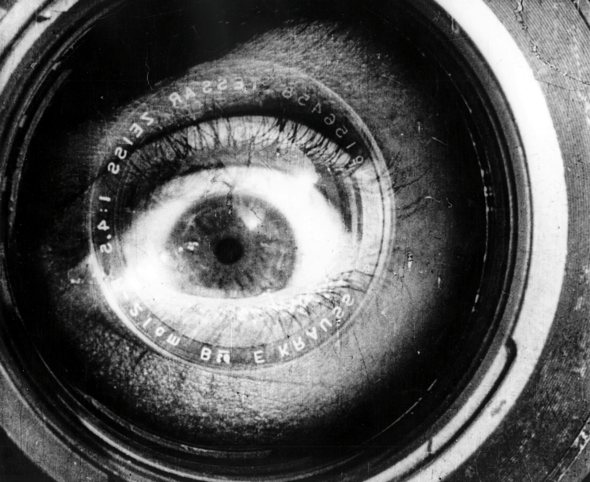
Is Dziga Vertov’s cine-city symphony a film whose time has finally
come? Ranked only no. 27 in our last critics’ poll, it now displaces
Eisenstein’s erstwhile perennial Battleship Potemkin as the
Constructivist Soviet silent of choice. Like Eisenstein’s warhorse, it’s
an agit-experiment that sees montage as the means to a revolutionary
consciousness; but rather than proceeding through fable and illusion,
it’s explicitly engaged both with recording the modern urban everyday
(which makes it the top documentary in our poll) and with its
representation back to its participant-subjects (thus the top
meta-movie)—Nick Bradshaw
 9. The Passion of Joan of Arc
Carl Dreyer, 1927 (65 votes)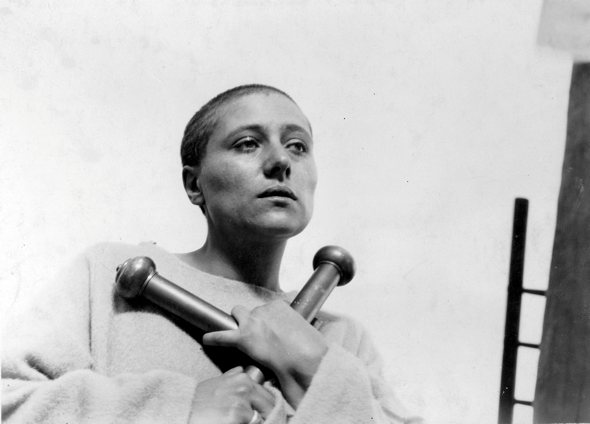
Joan was and remains an unassailable giant of early cinema, a
transcendental film comprising tears, fire and madness that relies on
extreme close-ups of the human face. Over the years it has often been a
difficult film to see, but even during its lost years Joan has remained
embedded in the critical consciousness, thanks to the strength of its
early reception, the striking stills that appeared in film books, its
presence in Godard’s Vivre sa vie and recently a series of unforgettable
live screenings. In 2010 it was designated the most influential film of
all time in the Toronto International Film Festival’s ‘Essential 100’
list, where Jonathan Rosenbaum described it as “the pinnacle of silent
cinema – and perhaps of the cinema itself”—Jane Giles
10. 8½
Federico Fellini, 1963 (64 votes)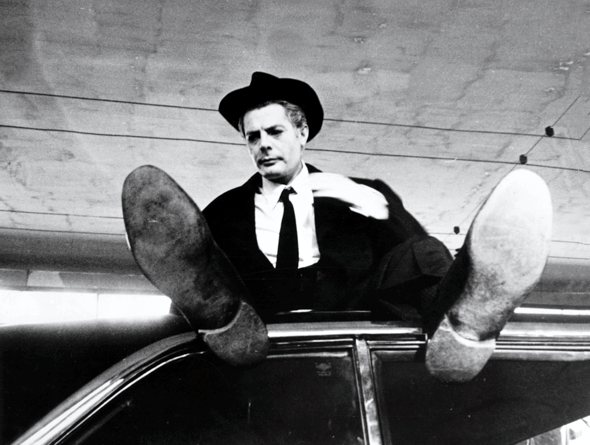 Arguably the film that most accurately captures the agonies of
creativity and the circus that surrounds filmmaking, equal parts
narcissistic, self-deprecating, bitter, nostalgic, warm, critical and
funny. Dreams, nightmares, reality and memories coexist within the same
time-frame; the viewer sees Guido’s world not as it is, but more
‘realistically’ as he experiences it, inserting the film in a lineage
that stretches from the Surrealists to David Lynch
Arguably the film that most accurately captures the agonies of
creativity and the circus that surrounds filmmaking, equal parts
narcissistic, self-deprecating, bitter, nostalgic, warm, critical and
funny. Dreams, nightmares, reality and memories coexist within the same
time-frame; the viewer sees Guido’s world not as it is, but more
‘realistically’ as he experiences it, inserting the film in a lineage
that stretches from the Surrealists to David Lynch


Aucun commentaire:
Enregistrer un commentaire